
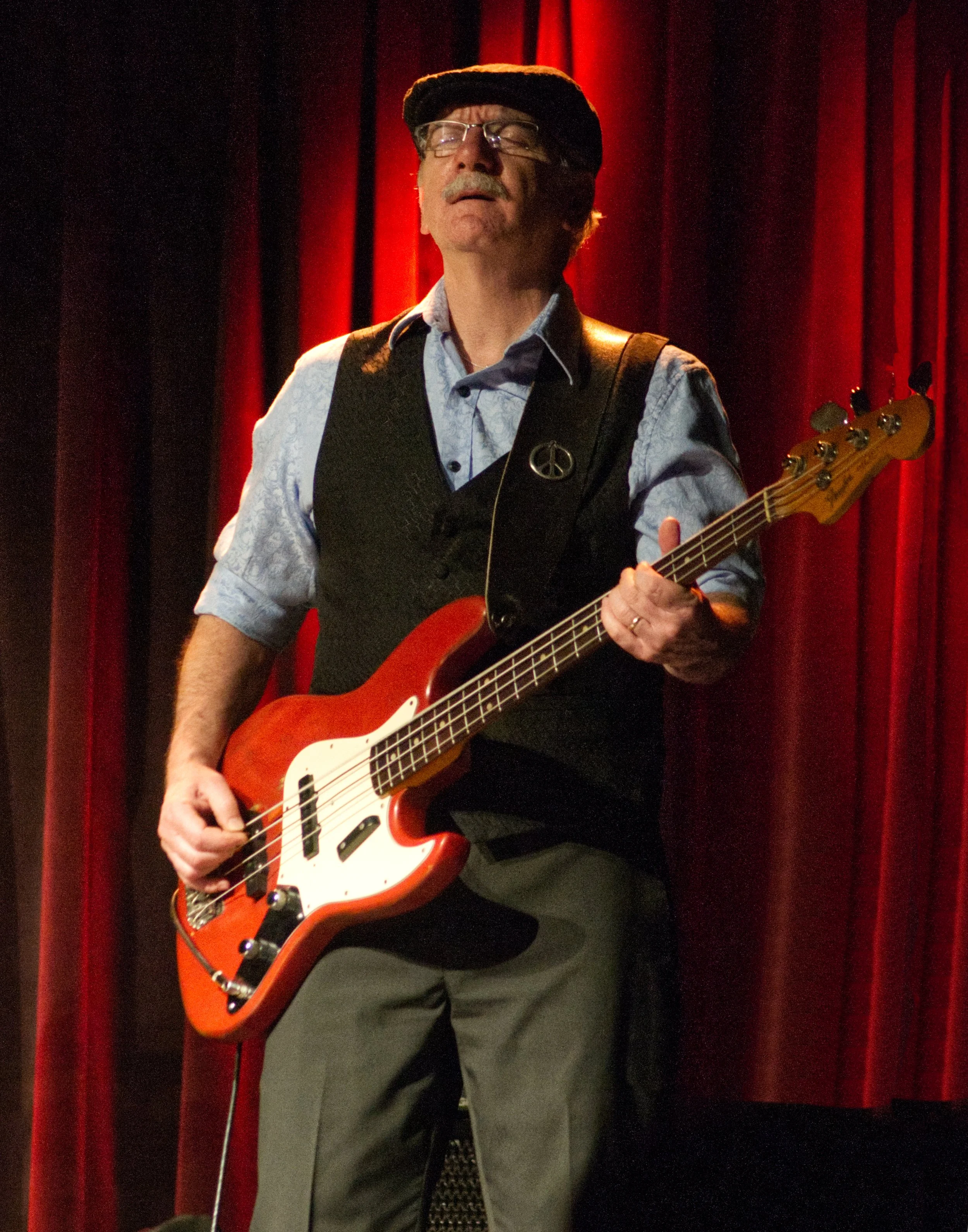
Jim Mouradian
James T. "Jim" Mouradian April 2, 1950
Mouradian grew up in Winchester, MA, as the son of Betty and Aram Mouradian, an Armenian genocide survivor. He had two sisters, Madelyn "Mappy" and Mary "Weensy," and a brother, Robert "Bob".
in a musical family, he was inspired to pick up the electric bass after watching The Beatles perform on The Ed Sullivan Show.
Around his college years, Mouradian worked in his family's rug business. According to accounts shared by Ronnie Earl and No Treble, he crafted a custom rug featuring the logo of his favorite progressive rock band, Yes, and gifted it to them. Following eye surgery that prompted him to rethink his career path, he left the rug trade behind to pursue guitar repair and building full-time.
Before establishing his own dedicated storefront, Mouradian honed his reputation over a 20-year tenure working out of Cambridge Music Center.
In the early 1980s, he launched Mouradian Guitar Co. in Winchester. Rather than chasing high-volume factory production, he focused on hands-on repair, restoration, customization ("hot-rodding"), and bespoke builds.
Four years after presenting Yes with his custom rug, Mouradian showed bassist Chris Squire a futuristic, open-body bass design. Squire commissioned him to build it, and the resulting green Mouradian CS-74 bass became iconic after Squire played it in Yes's 1983 music video for "Owner of a Lonely Heart".
Operating what the Guild of American Luthiers described as New England's largest guitar repair shop alongside his son Jon, Mouradian drew a massive clientele. According to The Boston Globe and Limelight Magazine, he worked on instruments for Joe Perry (Aerosmith), Kurt Cobain (pre-fame Nirvana), Pat Badger and Nuno Bettencourt (Extreme), Big Wreck, and Saigon Kick. He also famously maintained electric harps for Boston harpist Deborah Henson-Conant. Peers noted that he treated a beginner's budget guitar with the exact same care and reasonable rates as a touring rock star's vintage instrument.
Beyond his workbench, Mouradian was a dedicated, working electric bassist. He spent years anchoring the rhythm section for acclaimed blues guitarist Ronnie Earl and the Broadcasters and he also performed regularly with the group The Band That Time Forgot.
Friends and clients remembered him for his infectious optimism—he frequently called himself "the luckiest man you know"—and his willingness to mentor younger luthiers. His son Jon Mouradian continued running Mouradian Guitar Co. in the Greater Boston area, preserving his father's craft and reputation.